Heat stroke, or heat stress, is not something to be taken lightly. This can be a life threatening condition and unfortunately, in our tropical climate, it is something we see too often. When your pet’s core body temperature becomes too high, it can cause massive damage and even lead to organ failure in some cases.
Signs of heat stroke
- Constant & unusual rapid panting
- Difficulty breathing
- Restlessness & unwilling to settle
- Not wanting to move or collapse
- Very pale or dark red gums
- Little or no urination
- Vomiting
- Diarrhoea
- Confusion
- Dizziness and staggering
- Muscle tremors or seizures
What to do
Heat stroke is a deadly condition which is always an emergency. Ring the clinic and let us know that you’re coming, so we can be prepared to help as soon as you arrive. Offering cool water to drink and wetting the animal with cool (not cold) water and placing in front of the fan, or air conditioning, can help to try and cool them down while you’re bringing them into the clinic.
What happens at the vet
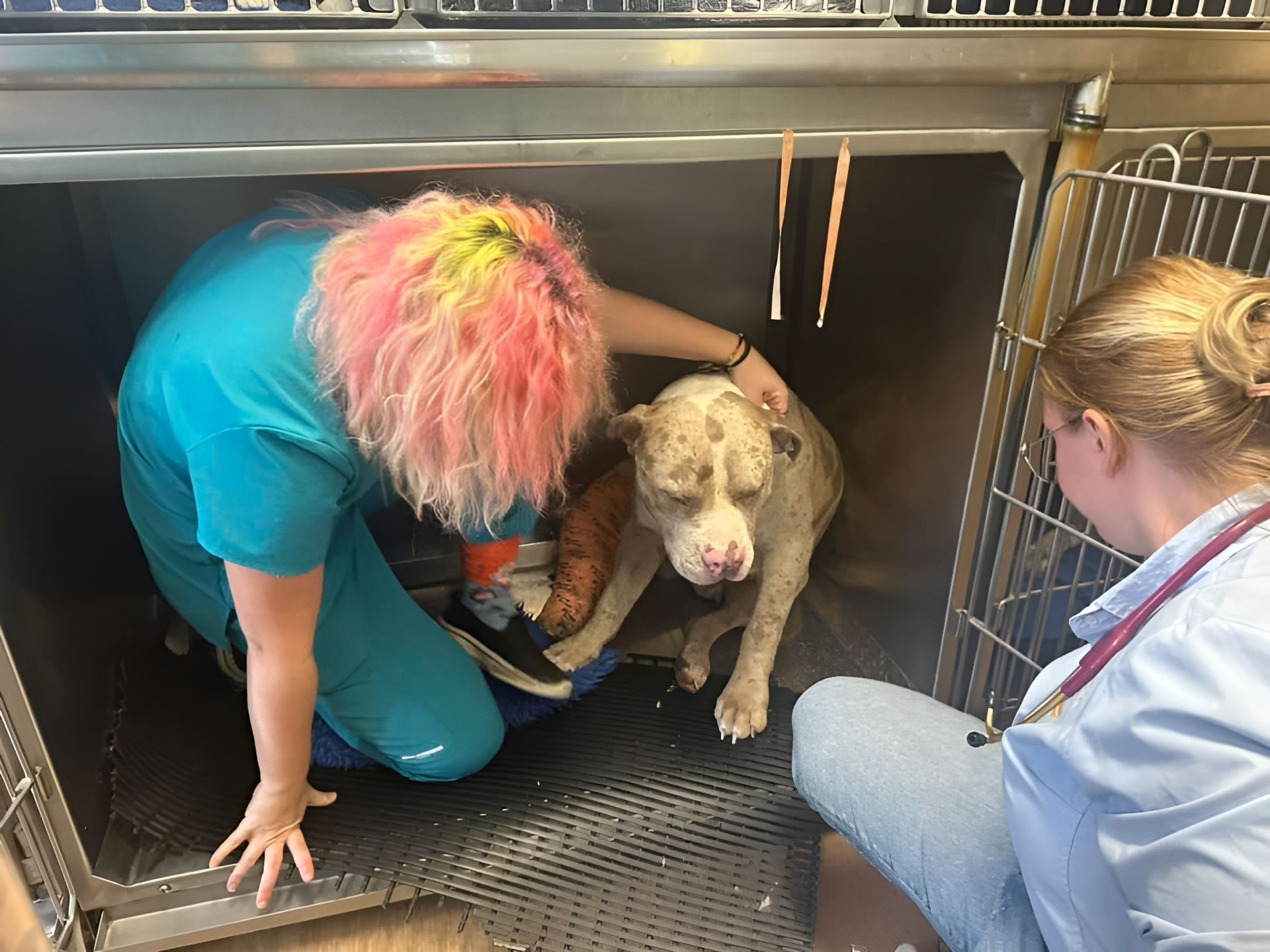
We use cooling treatments, intravenous fluid therapy and oxygen therapy to help your pets. We also use blood tests to assess for organ damage and provide medications to help manage the results of the heat stress on your pet’s body.
Prevention
Heat stress can happen to any animal, but there are some things that increase the chances of your pet being affected.
Obesity
Animals that are obese cannot get rid of heat properly through their skin and they have more problems breathing due to the fat over their chest. Helping your pet to lose weight will benefit them in many ways, not just preventing heat stroke.
Thick or long coats
Fur is designed to keep an animal warm, it does not protect or insulate them from the heat. Clipping long haired animals during summer can really help them stay cool.
Exercise
Too much, or even a normal amount of exercise can be bad when it’s too hot. From mid-morning to early afternoon is generally the worst time to exercise your pets, stick to the cooler times of day to help avoid heatstroke.
Dehydration
To prevent dehydration, always provide your pets with at least one or two clean, fresh water sources for them to access throughout the day.
Disease or old age
Any disease that compromises your animals health makes it harder for them to deal with the heat, in particular, animals with lung or heart conditions. Also, as animals age, their bodies are not as resilient and it can take much less to effect them, so be aware of this and always provide your pets with a cool environment away from the heat.
Young animals
Young animals are not as good at regulating their body temperature and may also not have learned that sun baking is a bad idea. Keep an eye on the little ones and always provide shelter from the sun.
Animals with short noses
Bulldogs, Pugs and Persian cats are not able to breathe as well as animals with longer snouts and are therefore less able to get rid of heat through panting and breathing. Be aware of this and make sure to always provide them with cool fresh water, shade and don’t exercise them in the hot part of the day.
If you’re worried that your pet has heat stroke, or if it has any of the above signs, please give us a call on (07) 4956 1897.